5 Minute Replies Without Hiring: Lead Nurturing Timeline With AI
Respond to inbound leads within 5 minutes, hold warm threads to a 4-hour reply window, then follow a four-phase timeline: Hour 0–24 for aggressive contact, Days 2–7 for value-first persistence, Weeks 2–4 for education, and Months 2–6 for long-term nurture. Speed to lead is the single highest-leverage rule in this whole process. Get it wrong, and everything downstream gets harder.
TL;DR:
Responding to inbound leads within five minutes significantly increases their likelihood of conversion, making speed a crucial factor.
A structured four-phase timeline uses aggressive contact in the first 24 hours, followed by value-driven persistence, educational content, and long-term nurturing over several months.
Trigger behaviors such as demo requests or repeat pricing page visits should instantly escalate leads to immediate, intensive outreach within four hours.
Automation platforms can score, route, and respond to leads in real time, maintaining strict adherence to timing standards without overburdening staff.
Maintaining a disciplined “value-to-ask” ratio, clear exit rules, and channel rotation ensures consistent lead engagement and prevents pipeline decay.
AstreauxRespond To Leads Without DelayAstreaux uses conversational AI to engage new leads instantly, personalize responses, and support follow-up for service professionals.Book a call
What Is the Ideal Lead Nurturing Timeline?
A lead nurturing timeline works in four distinct phases, and each one demands a different level of urgency. Treat them as a single cadence and you’ll either burn out hot leads with too much pressure or lose warm ones to silence.
Here’s the breakdown you can put into practice today:
Hour 0–24: Intensive response. Leads contacted within 5 minutes of an inquiry are 21 times more likely to qualify than those contacted at the 30-minute mark. A workable cadence looks like this: an email at minute 30, a phone call at hour 4, a follow-up email at hour 8, and a third attempt by hour 24. This pattern comes from documented lead follow-up research, and it works because most buyers are still comparing options in that first day. You’re either in the conversation or you’re not.
Days 2–7: Value-first persistence. Once the initial rush passes, shift from “checking in” to actually giving something. Send a short personalized video walking through a relevant case study. Connect on LinkedIn with a note referencing their specific situation. Share one piece of content that answers the exact question a lead in their position usually asks. The goal here is proving you understand their problem, not just proving you’re persistent.
Weeks 2–4: Educational cadence. Leads who haven’t converted by week two aren’t gone. They’re usually still gathering information. Invite them to a webinar. Send a comparison guide. Deliver deeper content that moves them from “aware of the problem” to “evaluating solutions.” This phase should feel less like sales and more like a resource they’d bookmark.
Months 2–6: Long-term nurture. For leads that stall past a month, drop the pace to something sustainable: monthly check-ins, seasonal content, and event-based triggers (a new hire at their company, a funding round, a relevant industry shift). This isn’t giving up. It’s playing the long game while your sales team focuses effort where intent is higher.
For cold or unresponsive leads specifically, a spaced-out cadence of Day 0, Day 3, Day 7, Day 14, and Day 30 keeps you present without becoming noise. If any lead in this slower cadence suddenly opens three emails in a week or revisits your pricing page, that’s your signal to snap them straight back into the Hour 0–24 intensity. The timeline isn’t a one-way slide. It’s a set of lanes, and leads move between them based on what they do.
What Triggers Should Move a Lead Between Timeline Stages?
Your timeline only works if something concrete decides when a lead graduates from one phase to the next. Relying on gut feeling here is how leads slip through the cracks. You need explicit triggers tied to explicit response windows.
The highest-intent behaviors deserve the fastest reaction:
Demo request: Treat like a new inbound lead. Respond within 5 minutes if you can staff it, and never later than the 4-hour warm-thread window.
Pricing page visit (repeat, within 48 hours): Escalate to a phone call attempt within 4 hours; this behavior alone often outperforms a single form fill as an intent signal.
Content download (case study, ROI calculator): Trigger a same-day, value-first email referencing the specific asset.
Email reply or click after 14+ days of silence: Pull the lead out of long-term nurture and back into an active, human-touched sequence.
No activity for 90 days: Trigger an automated breakup message before the lead ages out of active tracking entirely.
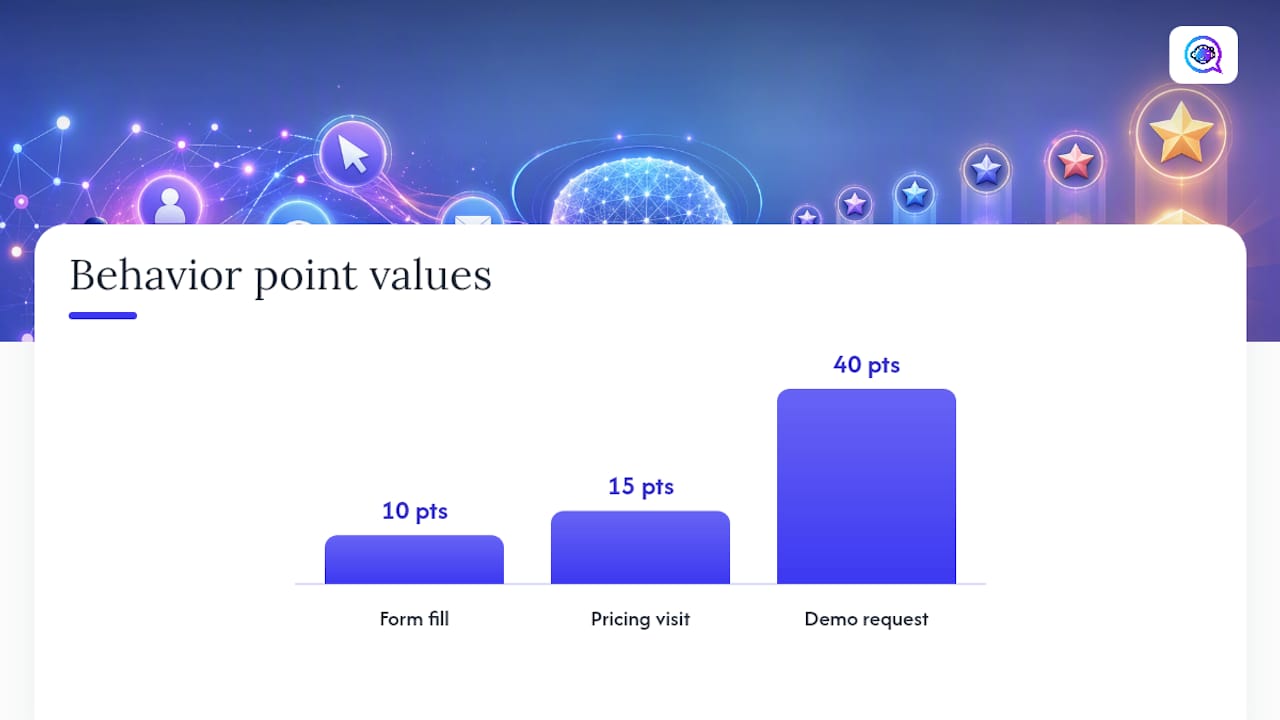
For scoring thresholds, a common structure assigns points by behavior type: a form fill might earn 10 points, a pricing visit 15, and a demo request 40. Leads crossing 50 points typically graduate from top-of-funnel (TOFU) to mid-funnel (MOFU) nurturing, and crossing 80 points usually signals readiness for bottom-of-funnel (BOFU) sales engagement. Your exact numbers will depend on your sales cycle, but the branching logic matters more than the specific thresholds: define an exit condition for every stage, so leads don’t sit in MOFU purgatory for six months because nobody built a rule to move them.
Pro Tip: Build your exit conditions before you build your entry conditions. Teams that design “when do we stop” rules first end up with far cleaner pipelines than teams that only think about how leads get in.
Getting this branching logic right often means connecting your lead source tracking directly to your CRM’s event system, so triggers fire the moment behavior happens rather than during a nightly batch job.
How Often Should You Contact Leads and Through Which Channels?
Follow-up and nurture are not the same job, and treating them the same is one of the most common timeline mistakes. Follow-up is fast, channel-diverse, and tied to a specific inbound action. Nurture is slower, more spaced out, and built around a steady content drip.
A tight 5-touch follow-up sequence for a fresh inbound lead might look like: email (minute 30), phone call (hour 4), text message (hour 8), email (hour 24), phone call (day 3). Notice no channel repeats back to back. That’s deliberate. Hitting the same inbox twice in a row reads as pushy; alternating between email, phone, and SMS reads as attentive.
For longer nurture sequences, 8 to 12 total touches across 60 to 90 days is a reasonable range for many B2B products, spread across:
Email (the backbone, roughly every 5 to 10 days)
Phone calls (at key trigger points, not on a fixed schedule)
LinkedIn or social touches (light, occasional, relationship-building)
Personalized video (used sparingly, at high-value moments)
SMS (reserved for time-sensitive nudges, like a webinar reminder)
Warm-thread replies within 4 hours convert at 28 to 35% same-day, compared to 18 to 22% when the reply lands between 4 and 24 hours. That gap alone justifies building your channel rotation around speed rather than convenience.
A useful ratio to keep in your head: three value touches for every one ask. If your last three messages were all some version of “are you ready to buy,” you’ve broken the ratio and the lead can feel it. An insurance-specific cadence example shows how this rotation plays out industry by industry, with SMS reminders slotted around scheduled calls rather than replacing them.
Which KPIs Tell You the Timeline Is Working?
Time-to-first-touch is the metric that predicts almost everything downstream, and your target should be a median under 4 hours during business hours. Track it weekly, not monthly. A slow drift from 45 minutes to 3 hours over a quarter is the kind of thing nobody notices until conversion rates have already dropped.
Metric | What it tells you | Target benchmark |
|---|---|---|
Time-to-first-touch | Speed of initial contact after inquiry | Under 5 minutes for inbound |
Warm-thread reply time | Speed of follow-up once a lead re-engages | Under 4 hours |
Time-in-stage (TOFU/MOFU/BOFU) | Whether leads are stalling in a phase | Varies by sales cycle length |
Per-stage conversion rate | Where leads drop off in the funnel | Set per historical baseline |
Time-in-stage matters as much as speed. A lead that sits in MOFU for 60 days when your typical cycle is 21 days isn’t “still deciding.” It’s usually stuck because nobody built the right trigger to move it, or the content assigned to that stage isn’t landing.
Set your reporting cadence to weekly for speed metrics and monthly for conversion trends. Then build one alert that actually matters more than any dashboard: a real-time notification the moment a lead crosses into “hot” scoring territory, so a warm thread never sits unanswered past the 4-hour mark simply because nobody happened to check the CRM.
How Does Automation Help You Enforce This Timeline?
Manually hitting a 5-minute response window across every lead, every hour of the day, isn’t realistic for most teams. AI-driven lead nurturing closes that gap by scoring leads in real time, enrolling them into the right sequence automatically, and flagging high-intent behavior the instant it happens rather than during the next team standup.
The setup pattern that works best follows four steps:
Capture: Pull lead data from every source (ads, forms, calls) into one system the moment it happens.
Score: Apply behavioral and demographic scoring so leads are ranked, not just logged.
Enroll: Automatically drop scored leads into the matching timeline phase (Hour 0–24 intensity or Weeks 2–4 nurture).
Escalate: Route any lead crossing a hot threshold to a human immediately, with full context attached.
Astreaux’s 7 Day Mortgage program is a useful illustration of this pattern in practice: a compressed, week-long sequence built specifically to turn mortgage inquiries into booked applications before buyer attention drifts elsewhere. A related pattern, the 3 Message Pilot, shows how a short three-touch sequence can be enough to qualify service leads without over-messaging them. Both work because the automation handles timing precisely while a human still handles the actual conversation.
Pro Tip: Set your escalation threshold conservatively at first. It’s far easier to loosen the rules once your team trusts the alerts than to win back trust after a flood of low-quality “urgent” pings.
What Are the Best Practices for Keeping This Timeline on Track?
A timeline is only as good as the discipline behind it. Here’s what separates teams that make this stick from teams that build a beautiful cadence and watch it decay within a quarter:
Hold the 3:1 value-to-ask ratio. For every direct ask, send three touches that give the lead something useful.
Build an explicit breakup sequence. Leads that go dark after 90 days should get one final, low-pressure message before you stop, not silence.
Never confuse follow-up with nurture. Follow-up is fast and channel-diverse; nurture is slower and content-driven. Mixing the logic breaks both.
Rotate channels every touch. Repetition in the same inbox reads as pressure, not persistence.
Personalize past the first name. Reference the specific action that triggered the message, not a generic template.
Set governance rules before launch. Define exit conditions, escalation thresholds, and ownership (marketing vs. sales) up front, not after leads start slipping through gaps.
Speed-to-lead tactics built for sales teams cover several of these governance questions in more operational detail, particularly around who owns the first response when marketing and sales share a queue.
A Practitioner’s View on Speed vs. Personalization
The tension in every lead nurturing timeline comes down to this: speed wins deals, but sloppy speed loses trust. A 5-minute reply that reads like a form letter does less for you than a 20-minute reply that references the lead’s actual question. The fix isn’t choosing one over the other. It’s setting a team SLA, something like a median warm-thread response under 4 hours, and reviewing it weekly against actual conversion data rather than gut feeling.
Most teams that miss their timeline aren’t lacking effort. They’re lacking a resourcing model that matches lead volume to response capacity during peak hours.
— Jamaal
Let Astreaux Handle the Timing So Your Team Can Handle the Conversation
This solution is an alternative to hiring more staff just to hit a 5-minute reply window. It is an AI system that replies to new leads instantly, books appointments automatically, and flags hot leads with alerts the moment they cross into sales-ready territory.
The timeline patterns covered above, the Hour 0–24 intensity, the 4-hour warm-thread rule, the trigger-based escalation, aren’t theoretical for Astreaux customers. They’re built into programs like the 7 Day Mortgage sequence and the 3 Message Pilot, which show exactly how a compressed cadence gets implemented for real estate agents, contractors, and financial advisors managing high lead volume without a dedicated SDR team. The platform also connects with numerous apps, so CRM triggers, ad platforms, and scoring rules feed the same automated pipeline instead of living in three disconnected tools.
If your current response times are creeping past that 5-minute window, that’s the clearest sign it’s time to see the platform in action. Visit Astreaux to start a trial or request a demo, and see how much of this timeline you can put on autopilot by next week.
Sources
A few sources worth bookmarking if you want to dig deeper into the research behind these timing rules:
Lead Follow-Up Best Practices: The Science of Persistent Professional Engagement
What Is AI Lead Nurturing? How It Works and Benefits | Salesforce
FAQ
What Is a Lead Nurturing Sequence?
A lead nurturing sequence is a planned series of touches, emails, calls, texts, and content, sent to a lead over time to move them from initial interest toward a purchase decision. Most B2B sequences run 8 to 12 touches total spread across the TOFU, MOFU, and BOFU stages.
What Is the 5-Minute Rule for Leads?
The 5-minute rule states that leads contacted within 5 minutes of their inquiry are 21 times more likely to qualify than leads contacted after 30 minutes. It applies specifically to inbound leads, where buyer attention is highest immediately after they submit a form or request.
What Are the Stages of Lead Generation?
Lead generation typically moves through top-of-funnel awareness (TOFU), mid-funnel evaluation (MOFU), and bottom-of-funnel decision-making (BOFU). Each stage uses different content and a different touch frequency, with leads promoted between stages based on scoring thresholds tied to specific behaviors like demo requests or repeat pricing page visits.
What Does Lead Nurturing Mean?
Lead nurturing means building a relationship with a prospect over time through relevant, staged communication rather than pushing a single sales pitch. It combines fast initial follow-up with a longer educational cadence, and tools like Astreaux can automate much of that staged communication so no lead goes untouched for long.