

5 Minute Responses That Win Mortgage Lead Follow Up for Loan Officers
Respond to a mortgage lead within five minutes and trigger a multi-channel 21-day nurture immediately after. That combination consistently outperforms any single tactic, and the Lead Response Management study backs it with real contact-rate data. The rest of this guide gives you the scripts, cadence, and CRM rules to make that verdict repeatable across every lead you get.
TL;DR:
Responding within five minutes dramatically increases the likelihood of qualifying a mortgage lead, as contact rates drop sharply after this window.
The first automated acknowledgment should be instant, followed by a live call attempt within minutes, with short voicemails and SMS follow-ups if unanswered.
Using multiple channels such as phone, SMS, email, video, and social media, each with a specific purpose, improves overall contact and engagement rates.
A structured 21-day follow-up cadence involves early contact, educational content, and low-pressure re-engagement, with longer-term nurture beyond 30 days.
Automation tools like Astreaux can enforce response timing, handle instant acknowledgments, and book appointments, reducing reliance on manual effort and improving follow-up consistency.
Astreauxcalendly.comRespond Faster, Follow Up ConsistentlyAstreaux automates personalized lead engagement, helps schedule appointments, and keeps qualified prospects moving through your follow-up process.Book a call
Why Speed-to-Lead Matters for Mortgage Lead Follow Up
Contact rates fall off a cliff the longer a lead sits untouched. The Lead Response Management study found that reaching a lead in the first five minutes dramatically increases the odds of qualifying them compared with waiting even an hour. Separate data from InsideSales found firms contacting leads within an hour were nearly seven times as likely to qualify them as firms that waited 60 minutes or longer.
Statistic Callout: Waiting past the one-hour mark doesn’t just slow you down. It can cut your qualification odds to a fraction of what a five-minute response delivers, according to the InsideSales infographic.
The math is brutal but simple. Every minute a lead waits, the chance they’ve already called a competitor, filled out another form, or simply lost interest goes up. Rate shoppers request three or four quotes at once. The loan officer who answers first usually frames the entire conversation, and every officer who calls after that is stuck playing catch-up. Speed doesn’t just improve conversion, it often determines who even gets a fair shot at the deal.
What Should You Do in the First Five Minutes?
Your first five minutes should run on autopilot as much as possible, then hand off to a live human the moment contact is made. Here’s the sequence that works:
Fire an automated acknowledgment instantly. The moment a lead submits a form or calls in, an automated SMS or email should confirm receipt and set expectations (“Thanks for reaching out, Sarah, I’ll call you within a few minutes”).
Attempt a live call within minutes. Keep the opening 30 to 60 seconds tight: introduce yourself, confirm what they’re looking for, and ask one discovery question, like “What’s driving the timeline, are you under contract or still shopping?”
If they don’t answer, leave a short voicemail and follow with SMS. Two lines, no more: “Hi Sarah, this is [name] from [company], got your info and wanted to connect. I’ll text you a few quick options, call anytime.”
Schedule a CRM reminder task immediately so the follow-up doesn’t rely on memory.
Confirm SMS consent before texting, and avoid quoting specific rates or promising approval in that first message. Compliance officers watch first-touch messaging closely, and a premature rate promise can create real liability.
Pro Tip: Keep your first voicemail and text focused on connection, not conversion. The goal of minute one is a callback, not a closed loan.
Which Channels Work Best for Mortgage Lead Follow-Up?
Each channel does a different job, and mixing them without a plan is what makes follow-up feel like spam. A multi-channel approach increases the odds of actual contact because you’re meeting the borrower where they’re already paying attention.
Phone is for real conversation: rate discussions, qualifying questions, and anything that needs your judgment as a licensed originator.
SMS is for quick, single-purpose touches: confirming an appointment, checking if a document arrived, or nudging someone who went quiet.
Email is for documentation and education: rate breakdowns, checklists, pre-approval next steps, anything the borrower needs to reread later.
Video is for standing out when a lead has gone cold. A 60-second personalized video sent 24 to 48 hours after no response often gets opened when a fourth text won’t.
Social works as a soft touch, a comment or a share that keeps your name visible without pushing a sales message.
Pro Tip: If a text and an email say the same thing, you’ve wasted a channel. Give each one a distinct job and the borrower stops tuning you out.
Keep every message personal and specific. “Hi {{firstName}}, still working on that rate comparison for you, want me to send it today or tomorrow?” beats a generic “just checking in” every time.
What Does a 21-Day Mortgage Follow-Up Cadence Look Like?
Most leads aren’t ready to move the day they inquire, which is exactly why a structured cadence beats a single burst of calls. The 21-day system popularized by mortgage coaches blends aggressive early contact with spaced-out value touches that don’t wear the borrower down.
Day 0: Instant acknowledgment plus a live call attempt.
Day 1: A context-pull email asking about timeline and goals, framed around helping rather than selling.
Day 3: A value-text, something like a current rate range or a relevant market note.
Day 7: A voice note or a boundary-check message asking if now is even the right time.
Day 14: An educational anchor, a short guide or checklist that keeps you useful even if they’re still shopping.
Day 21: A reactivation SMS that gives them an easy, low-pressure way to reengage.
Day 30 and beyond: Move to a monthly or quarterly nurture drip.
Each touch has one job: diagnose the real timeline, add value the borrower can use immediately, or secure a small commitment like a callback or a document upload.
Tag leads that go silent past day 21 as “long-term nurture” rather than closing them out entirely.
Reactivate tagged leads with seasonal rate updates or refinance triggers.
Track which day of the cadence actually produces the reply, most teams find it isn’t day 0.
How Should Your CRM Enforce This Follow-Up Cadence?
A cadence only works if your CRM enforces it automatically, because willpower alone won’t survive a Friday afternoon with forty open leads. Mortgage-tailored platforms like the ones referenced in BNTouch’s lead management overview build these triggers directly into the pipeline instead of relying on manual reminders.
Route leads by source automatically so a Zillow lead and a referral lead land with the right owner within seconds, not hours.
Assign clear ownership on arrival. A lead with no named owner is a lead nobody actually follows up on.
Trigger time-to-first-contact alerts that flag any lead untouched past your five-minute or one-hour SLA.
Run missing-document sequences that auto-remind borrowers when a pay stub or bank statement hasn’t come in.
Fire milestone-based status changes, moving a lead from “new” to “nurturing” to “application started” as real events happen, not on a timer.
Log the next action on every record so any teammate can pick up a file without guessing what’s already been said.
Route loan-specific language through licensed review before it goes out, especially anything touching rate quotes or approval odds.
Scripts and an Intake Checklist You Can Use Today
Consistency matters more than eloquence here. Every officer on your team should be working from the same intake fields and roughly the same opening script, even if the personality differs.
First-call script (30 to 60 seconds): “Hi {{firstName}}, this is {{yourName}} with {{company}}. I saw you were looking into a mortgage, what’s the timeline you’re working with, are you actively under contract or still exploring?” Close with a clear next action: “I’ll send over a couple of options today, what’s the best number to reach you at?”
Voicemail template: “Hi {{firstName}}, this is {{yourName}} from {{company}}, got your inquiry and wanted to connect. I’ll follow up by text in a minute, call anytime.”
Missed-call SMS: “Hi {{firstName}}, tried you just now, no rush, text or call back whenever works.”
Intake checklist: lead source, loan purpose (purchase, refinance, cash-out), timeline, documents already collected, preferred contact channel, and assigned owner.
Pro Tip: Paste your intake fields directly into your CRM’s lead form. If the data isn’t captured on day one, it usually never gets captured at all.
Which KPIs Actually Tell You If Follow-Up Is Working?
A handful of numbers tell you almost everything about whether your process is working, and they’re worth checking weekly rather than quarterly.
First contact response time, benchmarked against the five-minute standard from the LRM study.
Contact rate, the percentage of leads you actually reach on any channel.
Conversion rate, from first contact to application started.
Lead source ROI, which sources produce closed loans, not just raw volume.
Pipeline velocity, how many days it takes a lead to move from intake to application.
Statistic Callout: Firms that contact leads within an hour qualify them at nearly seven times the rate of those who wait, per the InsideSales data, which makes response time the single highest-leverage metric to test first.
Run small A/B tests on one variable at a time, send timing, channel order, or subject line, and give each test at least a few weeks and a meaningful batch of leads before calling a winner. When a test wins, scale it into your default cadence and retire the losing version completely rather than running both indefinitely.
How Astreaux Fits Into a Mortgage Follow-Up Workflow
AI can’t replace the licensed judgment a loan officer brings to a rate conversation, but it can handle the mechanical parts of follow-up that too often get dropped. A 7-day mortgage lead nurture case study shows how a short automated sequence turned early clicks into completed applications by keeping contact consistent when a human couldn’t respond fast enough alone.
Instant acknowledgments fire the moment a lead lands, closing the gap the LRM data flags as most costly.
Voice-trained draft messages match your usual tone instead of sounding like a generic bot reply.
Appointment booking happens directly inside the conversation, cutting the back-and-forth that stalls consultations.
Integrations across thousands of apps connect the same lead data to whatever CRM or ad platform you already run.
If you want to see the mechanics in a mortgage-specific setting, the AI lead response and booking page for mortgage brokers walks through how the automation layers onto your existing pipeline.
What I’d Fix First if I Were Auditing Your Cadence
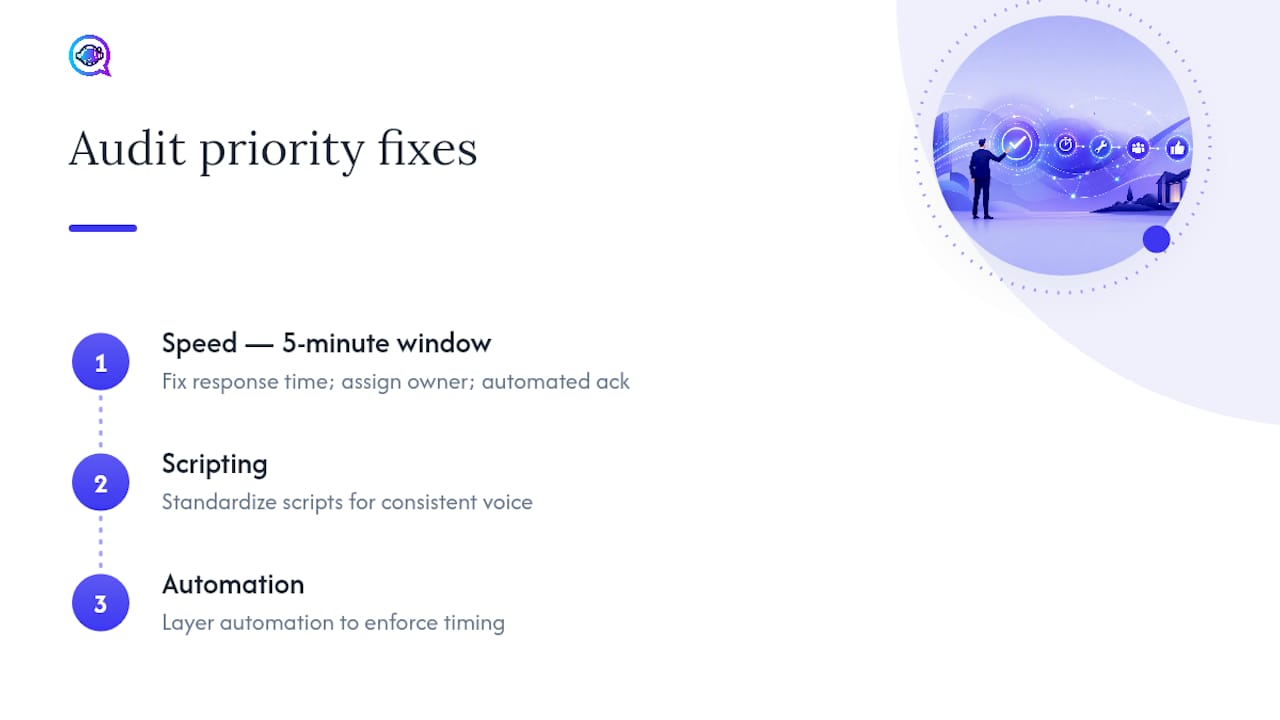
Three things separate teams that convert leads consistently from teams that don’t: speed, scripting, and automation, in that order. Fix your five-minute response window before you touch anything else, because no cadence survives a slow start. Then standardize your scripts so every teammate sounds consistent, and only after that layer in automation to enforce the timing you can’t manually sustain.
Two red flags I’d fix immediately in any shop: leads with no assigned owner, and no automated acknowledgment firing before a human ever picks up the phone. Both are cheap to fix and both quietly bleed conversions every single day they go unaddressed. If your own cadence has either problem right now, that’s the place to start, not the last item on your list.
— Jamaal
Try Astreaux for Faster Mortgage Lead Follow-Up
Manual follow-up asks you to be available at the exact minute a lead comes in, every time, for every source. Astreaux AI handles the instant acknowledgment, drafts responses trained on your own voice, and books the consultation directly inside the conversation, so the five-minute window gets covered even when you’re already on another call.

The platform connects with over 7000 apps, so your existing CRM, ad platforms, and calendar tools plug in without a rebuild. Teams that lean on SMS-first outreach can start with the mobile-focused automation setup built for exactly that workflow. If you want to see the approach applied specifically to mortgage pipelines, read the 7-day mortgage nurture case study, then book a demo at Astreaux to see how it handles your next lead the moment it comes in.
Sources
FAQ
What is the best way to follow up with mortgage leads?
The best approach combines an instant response within five minutes with a structured multi-channel cadence over the following 21 days. Speed determines whether you get the conversation at all, and the cadence determines whether that lead eventually applies.
How much commission do loan officers make on a $500,000 loan?
Commission structures vary widely by lender, loan program, and whether the officer is commission-only or salary-plus-bonus, so there’s no single industry-wide figure. Check your specific compensation agreement or your brokerage’s published pay structure for an exact number.
What is the 3-7-3 rule for a mortgage?
Definitions of this rule vary across the industry, and it isn’t consistently defined the same way by different lenders or trainers. Rather than treat it as a fixed standard, confirm the specific timeline your lender or compliance team follows for disclosure and closing requirements.
Are mortgage trigger leads illegal now?
Trigger leads themselves aren’t illegal, but regulatory scrutiny around them has increased, and rules on how they can be used and disclosed continue to evolve. Check current guidance from the Mortgage Bankers Association or your compliance officer before building any campaign around them.
Can Astreaux automate my mortgage lead follow-up?
Astreaux automates the initial acknowledgment, drafts voice-matched follow-up messages, and books consultations directly, which covers much of the mechanical follow-up work described in this playbook. Current pricing details are available directly on the Astreaux site.