

Real Cost of Slow Lead Response: ROI Formula and $168K Example
Slow lead response drains revenue fast: a business that lets its average reply time slip from under 5 minutes to 24 hours or more can lose tens of thousands to hundreds of thousands of dollars a year, depending on lead volume and deal size. The evidence base is consistent and specific, from the original “5-minute rule” research to 2026 benchmark data showing a median first-response time of about 42 hours industry-wide. The math below shows exactly how that gap turns into lost dollars, and what closes it.
TL;DR:
Businesses responding within 5 minutes can increase their lead qualification chances by roughly 21 times compared to waiting 30 minutes, emphasizing the importance of quick follow-up.
A 200-lead-per-month agency that delays response from 5 minutes to 24 hours can lose around $168,000 annually, demonstrating how response timing impacts revenue.
Slow response typically results from multiple small issues like routing gaps and automation failures, which can be addressed through process improvements and automation tools.
Responding to paid leads faster is critical since these prospects often compare multiple providers in real-time, while organic leads tolerate slightly longer wait times.
Implementing AI-driven automation, such as Astreaux, helps instantaneously personalize replies and schedule appointments, closing response gaps without increasing team size.
AstreauxRespond Faster, Capture More LeadsAstreaux uses conversational AI to personalize replies instantly, streamline scheduling, and help service professionals follow up with qualified prospects.Book a call
What Slow Lead Response Actually Costs You
Numbers make this real faster than any warning about “missed opportunities” ever could. Here are three scenarios that show how the cost of slow lead response scales with your business size and lead spend.
A local contractor buying paid leads. A roofing or HVAC company spending on paid lead platforms and pulling in 50 leads a month at a 20% close rate versus a 10% close rate (the typical gap between sub-5-minute and next-day response) can lose 5 to 10 closed jobs a month. At an average ticket of $8,000, that is $40,000 to $80,000 in monthly revenue left on the table, repeating every month the response habit doesn’t change.
A mid-size insurance agency. A 200-lead-per-month agency can lose an estimated $168,000 a year when average response time slips from 5 minutes to 24 hours, according to 2026 benchmark modeling from Kadence. That figure assumes no change in lead quality or ad spend, only a change in how fast someone picks up the phone.
A mid-market B2B team running paid ads. A company spending $10,000 a month on ads to generate 200 leads can lose roughly $540,000 a year if average response time drifts from 5 minutes to 30 minutes. That is not a typo. Thirty minutes, not 24 hours.
The pattern across all three: the loss compounds every month the ad spend or lead volume repeats. Buying more leads without fixing follow-up speed just multiplies the waste. You are, in effect, paying twice: once for the lead, and again for the pipeline that leaks out because nobody called back in time.
Why 5 Minutes Beats 24 Hours: The Benchmark Data
The “5-minute rule” is not marketing folklore. It comes from a body of research that has been replicated and refined for over a decade, and the newest data only sharpens the case.
Calling a lead within 5 minutes makes you roughly 21 times more likely to qualify it compared to waiting 30 minutes, according to the foundational Harvard Business Review analysis of online sales leads.
The typical company’s first response to a web lead now averages about 42 hours, per 2026 benchmark data from Pipes.ai, and only around 7% of teams manage to respond within 5 minutes.
More than a third of teams (35%) wait longer than 24 hours to make first contact, the same benchmark set found.
Contact odds fall off a cliff, not a slope. The decay curve isn’t gradual. A lead that goes uncontacted in the first few minutes is dramatically harder to reach at all, let alone qualify, because attention and intent both fade fast once someone has moved on to a competitor’s form or a different search result.
The 5-minute window matters because it’s the window when the buyer is still thinking about you. After that, you’re competing with whatever they clicked on next.
How to Calculate Your Own Cost of Slow Lead Response
Run this formula against your own numbers and you’ll get a dollar figure that’s specific to your business, not a generic average.
Find your current conversion rate. Pull this from your CRM: closed deals divided by total leads over the last 90 days.
Estimate your target conversion rate. Use benchmark data as your ceiling. Businesses that respond within 5 minutes typically see conversion rates several times higher than those responding same-day or later, per ClickToClose’s 2026 analysis of response-time brackets.
Apply the formula: (target conversion rate − current conversion rate) × monthly leads × average deal value = monthly revenue delta. Multiply by 12 for the annual figure.
Pull your average deal value from finance, not from memory. Use trailing 12-month average contract or ticket value, not your best month.
That’s (0.04 × 100 × $3,000) = $12,000 a month, or $144,000 a year.
Benchmark-based example: Same lead volume, but using the steeper multipliers from published response-time studies, where sub-5-minute response can more than double close rates versus next-day follow-up. The delta grows accordingly, often into six figures annually for businesses running any meaningful ad spend.
Pro Tip: Pull your “average first response time” report from your CRM before you calculate anything. Most teams guess low. The real number is almost always worse than what sales reps report anecdotally.
Why Responses Slow Down and How to Measure the Leak
Slow response is rarely one big failure. It’s usually five small ones stacked on top of each other.
Lead routing gaps. Leads sit in a queue or land with the wrong rep because routing rules haven’t kept pace with team changes.
Shift and coverage holes. Leads that arrive nights, weekends, or during lunch get no response until someone is back at a desk.
Burstiness. A single ad campaign or open house can generate a dozen leads in an hour, overwhelming whoever is on point that day.
CRM and automation gaps. No auto-acknowledgment, no task creation, no alert. The lead just sits in an inbox.
Low follow-up persistence. One call attempt, one voicemail, then the lead goes cold because nobody scheduled a second or third touch.
Five KPIs will tell you which of these is your actual problem: average first response time, percentage of leads contacted under 5 minutes, contact rate (leads reached versus leads assigned), attempts per lead before giving up, and qualified appointment rate. Track these monthly and plug the changes directly into the cost formula above. Improving contact rate by even 10 points, for instance, moves your “current conversion rate” input up, which moves your monthly revenue delta down.
How to Fix Slow Lead Response Without Overspending
Fixing this doesn’t require a bigger team. It usually requires a different set of rules and, eventually, some automation.
Start with process, because it’s free:
Set a hard SLA: first response attempted within 5 minutes during business hours, no exceptions.
Fix routing rules so leads never sit unassigned by leveraging AI-driven agent recommendations that match leads to the right reps automatically. Round-robin or skill-based routing both beat “whoever notices first.”
Build a consistent follow-up cadence: at least 5 to 7 touches across call, text, and email before marking a lead dead.
Know when to hire versus when to automate. Hiring a dedicated inbound rep makes sense when lead volume is steady and predictable. Automation makes more sense when volume is bursty, when leads arrive outside business hours, or when the payback math favors software over salary. A rep earning $50,000 a year needs to save or generate well more than that to justify the hire; an automation tool priced far lower can often hit the same speed target with less ongoing cost.
Automation closes the gap human schedules can’t. Instant AI replies, SMS-first outreach, and self-service calendar booking remove the variance that comes with lunch breaks, weekends, and slow Mondays. Speed-to-lead research points to automated first-contact workflows as one of the more reliable ways to lift contact rates without adding headcount. Our own breakdown of speed-to-lead tactics walks through specific plays teams use to close this gap fast.
Pro Tip: Pilot any fix for 30 days before rolling it out fully. Track first response time and contact rate weekly. If both move in the right direction, scale it. If only one does, you’ve found your next bottleneck.
Industry-Specific Variations in Cost Impact
The dollar cost of slow response scales differently depending on deal size, sales cycle, and how competitive the lead source is.
Real estate sits at the high end of urgency. A buyer or seller lead often fills out three or four forms with different agents in the same afternoon. Response within minutes can be the entire difference between a booked showing and a lead that never calls back, and with commission checks often in the five figures, even a handful of lost deals a year is a serious number.
Contractors and home services face similar urgency but shorter consideration windows. A homeowner with a broken water heater is not waiting 24 hours for a callback. They are calling the next name on the list.
Insurance and financial services deal in longer relationships but higher lead volume, which is exactly why the earlier $168,000 agency example matters. The per-lead loss looks smaller, but multiplied across hundreds of monthly leads, it adds up just as fast.
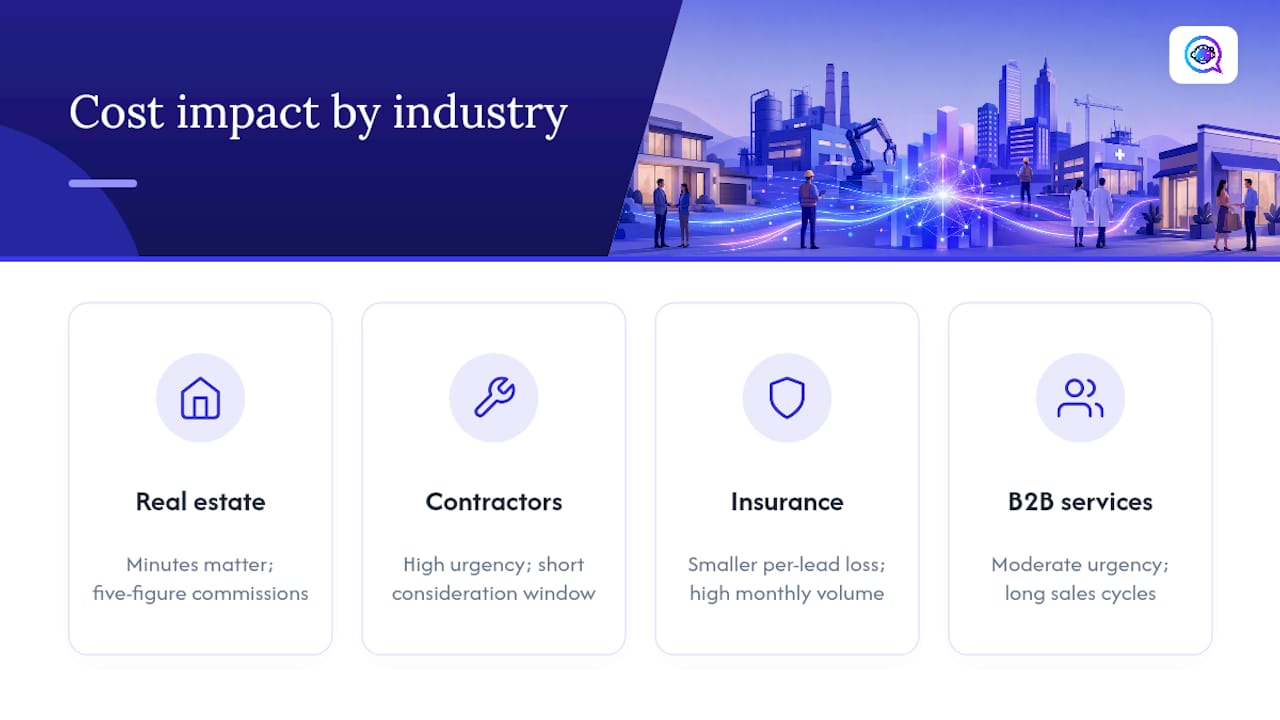
B2B and higher-ticket professional services (therapists building a caseload, mortgage brokers, consultants) sit somewhere in between. Deal values are high enough that even a few lost conversions a quarter matter, but sales cycles are long enough that a few hours of delay matters less than a few days of silence.
How Slow Response Changes Buyer Behavior
A lead who doesn’t hear back quickly doesn’t just wait patiently. They act.
Most consumers and B2B buyers shopping for a service submit more than one inquiry at a time. That means every hour of silence is an hour a competitor has to respond first, and once a competing rep books the call or answers the question, the original lead often stops replying altogether, even if your business eventually follows up. This is different from a customer simply forgetting about you. They didn’t forget. They moved on because someone else showed up first.
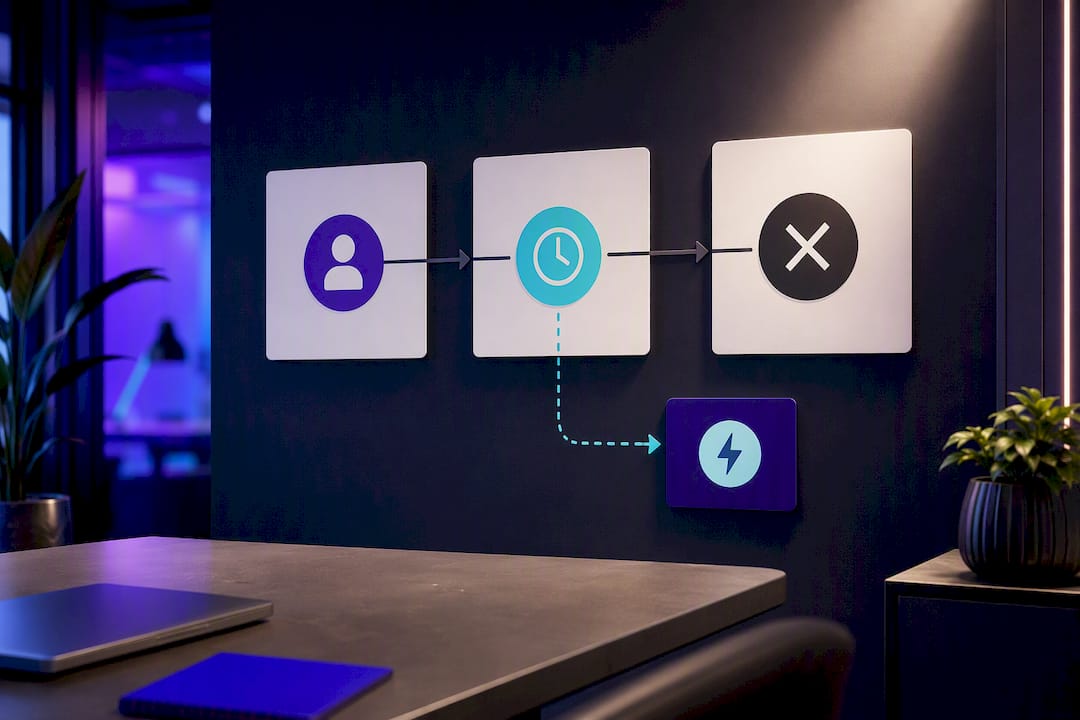
Buyers also read slow response as a signal about what working with you will be like. A lead who waits two days for a callback reasonably assumes that scheduling changes, billing questions, or service issues will take just as long to resolve later. That assumption shapes whether they book at all, and it shapes how they describe you to friends if they do become a customer and something goes wrong.
The Long-Term Reputation Cost of Slow Response
The revenue lost to slow response is the visible cost. The reputation cost compounds quietly in the background.
Review platforms increasingly ask customers to rate responsiveness directly, and a business known for slow follow-up accumulates that reputation in public, searchable form. A pattern of “never called me back” reviews does more damage over time than any single lost deal, because it discourages the next round of leads from reaching out at all.
There’s also a referral cost that rarely shows up in any dashboard. Fast, attentive follow-up is one of the most common reasons customers give when asked why they’d recommend a business. Slow response quietly removes that word-of-mouth engine, and most owners never notice the referrals that simply stopped coming, because you can’t measure a referral that never happened.
Case Studies: What Slow Response Costs in Practice
The Artemis GTM research on the “42-hour gap” frames this as a pipeline leak, not a customer service issue, and that framing matters for how leadership teams should treat it. Their analysis treats slow response the same way a finance team treats a cash-flow problem: quantifiable, trackable, and fixable with the right intervention.
That framing lines up with a broader pattern in how businesses measure delay. Slow accounts-receivable collection offers a useful parallel: adding just 5 days to collection time on $50 million in revenue can tie up roughly $685,000 in cash, with $41,000 to $68,000 in lost interest, according to Aptic’s 2026 analysis. Slow lead response works the same way: money that should be flowing into the business gets stuck in a delay, except instead of unpaid invoices, it’s unconverted leads sitting in an inbox.
The through-line in every documented case is the same: the business rarely notices the leak until someone runs the math on response time specifically. Revenue looks flat or slightly down, ad performance gets blamed, and the actual cause, a growing gap between lead arrival and first contact, stays invisible until someone pulls the CRM report.
Where the Real Wins Show Up
The biggest wins rarely come from a fancier script or a better ad. They come from consistency: the same fast response on a Tuesday afternoon as on a Saturday night. Most teams don’t have a speed problem during business hours. They have a speed problem the moment coverage gets thin, and that’s exactly when leads are most likely to shop around.
One pattern worth watching closely is calendar booking tied to instant confirmation. Service businesses that pair a fast first reply with an immediate, self-service appointment slot tend to see fewer no-shows, not just faster conversions, because the buyer commits to a specific time while their interest is still fresh rather than waiting for a callback that may or may not come.
— Jamaal
Try Astreaux for Faster, Personalized Lead Response
Astreaux is built for the exact gap this article just walked through: the hours between a lead arriving and a real reply landing. It learns your business’s voice and sends instant, personalized responses to new leads the moment they come in, so the 5-minute window doesn’t depend on who’s at their desk. It also handles appointment booking directly in the conversation, which is where a lot of the no-show reduction and faster qualification described above tends to show up.

Some service professionals use it to keep leads warm around the clock, with integrations to many apps so it can slot into various CRM or ad platforms. If you’re a contractor specifically, the Astreaux AI page built for field service scheduling walks through estimate booking and follow-up in more detail. For everyone else, the best next step is to see it against your own lead volume: visit Astreaux AI and start a pilot on your next batch of incoming leads.
Sources
Not every lead source punishes slow response the same way. Paid search and paid social leads tend to be the most time-sensitive, because the buyer is often actively comparing multiple providers in the same browsing session; a delayed response here loses the lead to a competitor almost immediately. Referral leads are more forgiving, since the buyer already has some trust in you before they reach out, but even referrals decay if the wait stretches past a day or two.
Website form fills and chatbot-initiated leads sit in the middle. The buyer showed enough intent to type out details, which means they expect a reasonably fast reply, but they’re often earlier in their research than a paid-ad clicker who is ready to buy now. Organic and SEO-driven leads tend to be the most patient of the common sources, since the buyer arrived through research rather than urgency, but “more patient” doesn’t mean “unlimited.” A week of silence still loses organic leads to whoever they find next.
The practical takeaway: if your lead mix leans heavily toward paid channels, your speed-to-lead SLA needs to be tighter than a business relying mostly on referrals. Matching response urgency to lead source is one of the simplest ways to prioritize which leads get the fastest human attention when your team can’t hit 5 minutes on every single one.
The Short Life of Online Sales Leads — Harvard Business Review (2011)
Cost of Delayed Lead Response: 2026 Revenue Loss Benchmarks | Kadence
Lead Response Time and Close Rates: 2026 Data Analysis | ClickToClose Blog
FAQ
What is considered a “fast” lead response time?
Under 5 minutes is the benchmark most research points to, since contact and qualification odds drop sharply after that window. Our lead response time benchmark guide breaks down what “fast” looks like across different lead sources.
How much revenue can slow lead response actually cost a business?
It ranges from tens of thousands to hundreds of thousands of dollars a year depending on lead volume and deal size. A 200-lead-per-month agency, for example, can lose an estimated $168,000 annually when response time slips from 5 minutes to 24 hours.
Why does response speed matter more than lead quality?
Because even a well-qualified lead goes cold fast if nobody reaches them in time. Calling within 5 minutes makes you roughly 21 times more likely to qualify a lead than waiting 30 minutes, regardless of how strong the lead looked on paper.
Does automation really fix slow response, or does it just mask the problem?
Automation addresses the root cause when the issue is coverage gaps, burstiness, or inconsistent follow-up rather than a lack of effort. Tools like Astreaux send instant, personalized replies around the clock, which directly targets the off-hours and high-volume gaps that hiring alone often can’t cover.
What does Astreaux cost?
Pricing isn’t published on the site, so current plans and rates are available directly through Astreaux AI.